
Monday, June 28, 2010
Basting: It's Not Just for Turkeys
 10:58 AM |
  Posted by
Ellen Anne Eddy |
Posted by
Ellen Anne Eddy |


 Several weeks ago, I went looking to order another basting gun. They don't last forever. Even with new needles, there's a day when the pin bends. I was appalled to be told my supplier wasn't carrying them anymore.
 These are a love/hate item for a lot of quilters. Do they leave holes? Yep. They can. Do they jam? Yep, they do.Why am I insistent on having one? Because they're still the most hand-friendly way to baste out there.

In comes my tack gun.I can tack things up, look them over, clip out whatever doesn't work. Problems and all, I'm still in love.

The Quilt Basting Gun
 is a good design tacker. It's perfect for basting large elements to your quilt.
  You might want to consider the Micro stitch
 for basting quilts. The tacks are smaller and leave smaller holes. I usually steam a quilt and the holes all pull together.
Either way, I feel the baby is in danger of going out with the bath water here. They're not a perfect tool, but I can't imagine being without.

Tuesday, May 11, 2010
Fabulous Felt:Unthinking Interfacing

The main room was the ordinary sewers room. It had domestic cottons, polys, wools and test tube baby fabrics like satins and lace. It also had the craft fabric, with a huge wall of felt.
Felt has gone through a lot of reincarnations. In the 1980's I would have given it the most useless fabric award with bells and ribbons on it.
The original felt of felt skirts and jackets was pure wool. It was a delicious fabric to work with. It was strong, bright and beautiful. By the 80's it also cost the earth. So it was replaced with a hybrid of wool and rayon. This nightmare fabric had curly wool fibers mixed in with straight tree bark fibers (Rayon is made from tree bark.) What a tactical error. Instead of being strong and vibrant, it was always pulling apart( curly and straight fibers don't make a good combination.) At some point I completely wrote it off as a fabric I would ever use again. It didn't even paste together well.
When the first poly felt came out it too was thin and nasty. So I've ignored felt for neigh on 15 years.
So I was completely surprised when Lauren Strach (a fabulous quilter out of St. Joseph, MI) came in with some embroidered flowers where she'd used the new poly felt as a stabilizer.

So the sandwich, top to bottom is
Surface fabric
Steam-A-Seam 2
Felt
Totally Stable

You can use wool felt as well. It's pricey and the poly works just as well.
The other thing that makes this work is Sharon Schamber's Halo hoop. This weighted hoop supplies extra support without having to be clamped or unclamped. See my blog Hoop de doo for more information about this fabulous tool.
Wrapping it up:
Poly felt makes a fabulous stabilizer for embroidery. And keep your mind open. Fabrics change all the time. There's no knowing when you'll a new use for something old.
Tuesday, April 27, 2010
Shopping at Quilt Stores:The Care and Feeding of Community

So why should we ever shop anywhere else?
There's a delusion that a store is only a place to buy something. I say it's a delusion because that may be it's primary purpose, but it's not its job. Stores create community. A great store is the beginning of a great community.
How does this work? It depends on the store. It depends on their attitude and what they offer their clients.It depends on the client's willingness to join in.
Do you need to know where the local quilt guild is?
Ask the store.
Do you need someone to fix your machine?
Ask the store
Do you need someone to show your quilt to before you bust?
Take it into the store.
Do you need someone to help you match the thread or fabric?
Ask the store?
Do you need to know about new products?
Ask the store.
Do you need to know a great long arm quilter who will finish your quilt?
Ask the store.
Are you beginning to see how this works?
But past that, it's a place to meet other quilters, take amazing classes, find out what's new, share your joy, and be with people who love what you love.
Whenever I travel I ask to see the local quilt store. What I find there tells me a great deal about the community I've come to teach in. I can see if they're traditional or arty, active or passive. The store is not about the store strictly. It tells me a great deal about the people it serves.
Much sadder are the places where the store once was and is now gone. The chain stores have a bit of everything, but never the focus or range you can expect from a store specialized in quilting. It makes a huge hole in the community when a store closes.
Much sadder are the places where the store once was and is now gone. The chain stores have a bit of everything, but never the focus or range you can expect from a store specialized in quilting. It makes a huge hole in the community when a store closes.
One of my favorite quilt stores is Glacier Quilts in Kalispell, Montana. This is not an easy place to get to. It's tucked right next to Glacier National Park. And it's completely worthy.
They have a mountain of fabric. That's always good.They have a brilliant sewing machine mechanic. That's always better. They've got a wall full of notions, and books, and all the fixings.
So what makes it better than that?
They have children who are part of the store. There's a large playpen for your child and they'll let you borrow their's if you're suffering from baby withdrawal.
They have machines set up for people to just come in and use. You can work on an aids baby quilt or bring in something you're working on and do it in company.
They host amazing classes.
They bring in snacks and lattes at need.
They're right next store to a outfitters store where your husband can be parked.
They have brilliant other quilters working there who will share their opinion if asked.
They create a community where people can go.
This is one of many great stores I've seen. It's one of the very best. This is what the internet cannot bring you: community in your community.
What is the price for this community?
If you don't support little stores, they can't support you. That's also true of vendors at quilt shows. They take big risks to bring you what they have. When you see bolts and bolts of fabric, you see not their wealth but their debt. They're prices may be a bit higher than a chain store because they probably can't buy in the same volume.
But if you're running off to the chain store 3 times out of 10, the chances are your little store won't be there in a year. So for perhaps 50 cents less, you can lose your little store.
We recently learned the Walmart lesson. Walmart put in fabric in their stores and undersold everyone. Everyone bought at Walmart. No one else could compete with their buying power. Many small stores failed under that weight. Now Walmart tells us it's just too much trouble to sell fabric. After all, it takes people who help you.
Perhaps this is the beginning of a good thing. Perhaps we'll have room for more great little stores where people meet for classes, learn cool things, and care for each other.
Wrapping it up:
If you're in Kalispell, visit this shop because you'll think you went home. Visit your local store and see how they make you at home there too. Shop the internet as a last resort because it really is that. It can't ever make you feel at home. Because home is where the heart is and the internet is not a place of the heart.
| Glacier Quilts 125 Hutton Ranch Road PO Box 7274 Kalispell, MT 59901 Phone: 406-257-6966 Fax: 406-257-6969 email: info@glacierquilts.com www.glacierquilts.com |
Saturday, April 24, 2010
Enough Ironing Board: How Board Can You Be?

My father used to say if a job took too long, was too nasty, or didn't work right, you had the wrong tool. He also said you could use a hammer for a saw, but it was hard on the hammer and hard on what you were sawing. He didn't often say much, but he was surely right about this.
I have a small table I've used as an ironing board for years. I covered it with cotton quilt bat and some muslin dipped in boric acid solution as a way of making it fire retardant. It's so much easier to work than an ironing board. It also never falls over.
Did I say it was a small table? I don't often work large but when I do, I do. I'm working on a piece that's around 68"x50". Since all of that has to be backed with a stabilizer, I've been wrestling with it on that small board.
I also have a lovely old Create-A-Space table I bought over 20 years ago. It's about 48" by 74", and it came with a cutting mat.
I morned the day they stopped carrying these. Mine is a bit rickety but a worthy studio companion. There are smaller versions of this available, but this was worthy.
The smaller versions have an ironing board cover you can order. I did, not thinking the smaller issue would count. I've always been in the headset that you can always stretch things. Not that much.
It had an interesting grid and a foam sheet to put under it. And it fit just like a mattress balances on a bottle of wine. It was useless.
As I was making my plans to buy some really wide muslin and get some boric acid, I walked past the linens isle in the discount store. The twin mattress pad fit perfectly.It was cotton with poly bat. It cost around $8, rolls up in the cupboard when I need to cut on the board and doesn't have a odd foam sheet for me to lose in the studio somewhere.
Follow this link to E how, where they talk about how to make fabric flame retardant with Borax, boric acid, and a spray bottle. Easy and low tech.
Wrapping it up:
If you've got a table the size of a twin bed, and you have a mattress pad, you can have a ironing board pretty much the size of God. And if you can think outside the box, you can do just about anything.
Monday, April 12, 2010
Say Cheese: the Wonders of Cheesecloth

So many things really are see through. Flowers, water, air, smoke, fire and ice are all if not see through, translucent. So it makes sense to use see through and translucent fabrics to represent them.
In the quest for the new, some while back, I discovered something old. I wish I remembered the name of the lady who showed me. I was in Athens, Georgia, teaching. A lovely woman from Germany pulled out a wad of cheesecloth. I was in love! What a wonderful fiber!
This is exactly the same cheesecloth that you use in the kitchen. It's 100% cotton so it dyes beautifully. And because it's so thinly woven, it's sheer. But because it's hand-dyed, it can have all the amazing mottled surface of hand dye.

There's no trick to dyeing cheesecloth. It dyes perfectly with fiber reactive dyes, just like other cottons. The trick is in washing it out. It's a bad boy and it needs to be kept isolated to make sure it doesn't tangle or shred. I put mine in a tied nylon knee high, and then stuff it in a nylon laundry bag. That keeps it from getting mangled. The one time I had a whole bag of cheesecloth get loose in the washer, it became a solid mass of cheesecloth. For a while, I wore it like a fox wrap. Then I gave it to someone who made paper with the fibers. There's always a use somewhere.
And like most wonderful things, it can be used in other ways. I've always offered the idea of using lime green cheesecloth on a turkey for those special Thanksgivings where you have to deal with a relative you're less than thankful for. For some funny reason, they don't seem to come back after that.
It's cheesy. I've never really done it, but sometimes the fun is just in the imagining.
Friday, March 5, 2010
Working with the Weird: Can I Put that on My Quilt?

Of course it didn't work.After I'd proved that with about 10 hours of ineffective needle punching, I layered it with Aqua-Film over the yarn and stitched it all down with mono-filament nylon. I was declared stubborn as a child, but our childhood faults are often our adult virtues. Now they say I'm determined.

After years of doing all kinds of things to materials most folk don't try to quilt with, it seems a worthy question. How do you know if you can put it on your quilt?
If we're talking fabric, it's a shorter list of potential woes and issues. For starters, it's probably flat. The big questions are:
- Will it melt?
- Is it too thick to stitch through? If you can't stitch it, how will you put it on?
- Is it knitted?(Knitted things are harder to fuse and much harder to stitch)
- Is it rayon?( if it is it's probably not light fast.)
Natural objects have one basic problem. Will they break? Feathers, leaves, sticks, whatever, it will dry out and then they're likely to break. Particularly if you're sending it out and showing it.
Unnatural Objects. This sounds much worse than it is. But things like plastic toys, odd bits, old jewelry are all possibilities if they get through this list of issues.
- Is it sticky?
- Will it break?
- Will it melt?
- Will it bend permanently if I fold it?
- Can I fuse it?
- Can I stitch through it?
- Will the objects rip the quilt surface?
Is it going straight on your wall, never to move? You can feather it,bead it, attach sticks and stones, put plastic cruddies on it and not even blink.
Is it aimed for national shows? You need to think about how you're going to send it. And how they will send it back to you ( Not always the same thing).
If you're selling it, you need to at least let the buyer know what's possible. If things will either melt, bend or break, let them know.
Think about where your quilt will be while you choose its odd embellishments.
Wrapping it up:
The world is full of wonderful weird fabrics and things that probably should end up on a quilt somewhere. Just make sure they'll go along with your plans for that quilt.
And remember that our stubborn streaks as a child make us fully determined and able (and probably dangerous) as adults. You're the only one who ever gets to tell you, "no".
You'll find Bo-Nash Powder at Amazon.com if you're local store doesn't carry it. But always try your local store first. They deserve you're support and make your quilt community. Help them be there for you.
Wednesday, March 3, 2010
Glue it to it: My Favorite Fusible

One of the odd things about having quilted long enough is that you have a living history of the march of products. I've been at this since 1975 which means I've gotten to see them all come and go. The techniques change a little. What marches that change most is the available products. This was never so true as with fusibles.
My first adventure in non-sewn applique was in 1975 and it involved scotch tape. Which melted, but not in any way you would suspect or want. As you can imagine, I didn't try that again.
Somewhere in the early 1970s Stitch Witchery arrived. I started using it in the early 1980's. It was an unbacked glue web that spread everywhere and created a fabric surface just like cardboard. It was the only game in town for those of us hopeless in hand-applique. We used it, or tried to and pretended it looked fine.
Wonder Under was a big step up from that. It had a paper back. You ironed it onto your fabric and cut your shapes and then ironed them down. At least the glue stayed put. It created a fused surface that held it's edge as you stitched it by machine. It was functional. And it was paper backed, which meant the shapes matched your fabric shapes and you didnt' smear your iron.It also glued up fabric you might want to use in other ways and created a whole new stash category of pre-glued fabric.
A few years after that, Aileen's Fusible Web showed up. If you looked at it next to Wonder Under the difference was immediate. It had at least twice the amount of glue on the surface but was no more stiff. It was wonderful. And it was also paper backed. I used it until their factory burned down and then we were left with Wonder Under again.

So I missed Steam-A-Seam 1. It was tacky. And I don't just mean the fabric. You could tack it on to one side of the fabric and it would stick. You could also remove it so you didn't have a pre-glued fabric collection anymore. And it was paper backed. Ironing it made it permanent.
That was good. The second version (Steam-A-Seam 2) tacked on both sides. Ca-Ching!!! You could tack it on to your fabric. Then peal the back and tack it on to your piece. And move it endlessly. Only when it ironed was it on forever. They made a light version of it which is functional for cottons and miserable for the brocades, laces, and sheers I like to fuse with. But I still buy Steam-A Seam 2 in 25 yard boxes and go through something like four of them a year.
There are new fusibles that have come out, but they aren't paper backed and I just won't go there. I know I'll make a mess.

- No glue holds things down indefinitely. You will need to stitch it in some way. I use mono-filament nylon for soft edges and either poly or metallic thread and a zig zag stitch to make it stay.
- I am doing wall hangings, so I prefer my work to be stiff. You may have other druthers. Honor those. Use a product that gives you the right results for you.
- Glues get old. Don't buy more than you can use in 3 months. If it does get old, you can use it old style by ironing it on to your fabric. But what a mess.
- Odd fabrics like brocade, lace cheesecloth, sheers, an angelina fiber can all be fused but you'll need a non-stick pressing cloth to catch the glue.
- In case you don't catch the glue, iron cleaner is your friend. I clean my irons around every week.
Wrapping it up. The glues just get better and better.I'm an unabashed fan of Steam-A-Seam 2 for it's tack and it's fusing capabilities.
You'll find Steam-A-Seam 2 at any fabric store worth it's salt. It comes in bolts of 12" wide, and then in packages of sheets and in small strips in rolls for hemming. I use those for making rod pockets. See Quick and Easy Machine Binding Techniques for instructions.
Subscribe to:
Posts (Atom)
Essential Embroidery Stitches

Get this free book from Quilting Arts. It has a series of articles I wrote called Defining the Line
My Blog List
-
Moving Day14 years ago
-
Getting Together14 years ago
-
Getting Together14 years ago


Facebook Badge

My Blog List
-
FOCUS5 days ago
-
Like a Rolling Stone3 weeks ago
-
Embroidered Felt Bowl #4.2 months ago
-
-
2021 Calendar5 years ago
-
A Change is Coming….6 years ago
-
GOrillas! on the Move!6 years ago
-
finish line in sight7 years ago
-
Easton Walled Garden7 years ago
-
-
Winsor Newton Pigment Marker Review9 years ago
-
gelliprint met gedicht9 years ago
-
Casey's T-shirt Quilt9 years ago
-
-
The San Salvador Sails By ...9 years ago
-
-
Construction Zone 10111 years ago
-
What a summer....so far11 years ago
-
Revealing BSBP 8....12 years ago
-
So this is Week 7?12 years ago
-
The last cloth doll making cruise13 years ago
-
-
Fall journey13 years ago
-
I've Moved...My blog That Is!13 years ago
-
This Blog has Moved....13 years ago
-
QUILTVERSE HAS BEEN REVIEWED!14 years ago
-
-
-


Guest Blog On Quilt Gallery
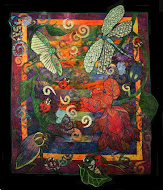
A Beauty Beheld
Guest Blog On Subversive Stitchers!
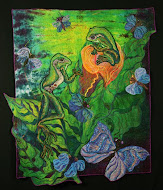
The Stories Tell Me
Networked Blogs

