
Saturday, February 13, 2010
No-Tears Ripping
 4:35 PM |
  Posted by
Ellen Anne Eddy |
Posted by
Ellen Anne Eddy |


Please. Real boats rock. Dip. Sometimes roll over. The question is not will it happen. It's what will you do when it does.

The small blue seam ripper is a surgical seam ripper. The flat blade slips right under straight stitching and lifts it right off. You'll find these at Nancy's Notions .
Of course there's lots of thread fluff after you rip. Take some masking or packing tape, tape the surface and the fluff comes off. You're ready to sew again. If you have big holes from your stitching, steam iron your piece and they should shrink right down.
If you have a local store that carries these, please support your local store. It's a treasure that deserves your support. They make your community. Make sure you support them, so they can be there for you.
Wrapping it up:
Remove zigzag stitching with a mustache trimmer.
Use a surgical seam ripper for straight stitching.
And don't let any one tell you it never happens to them.

Thursday, February 11, 2010
Bling bling bling! Angelina and Crystalina, The Sun the Moon and the Stars!

Every so often something comes out that completely changes your world. Don't think that's comfortable. It's marvelous, but like ice water down your back on a skillet-hot day, it's a shock. So sometimes it takes a bit of time to even try it.
Angelina fiber was like that for me. Pat Winter brought me a little envelope of it that must have sat in my studio for around 9 months before I got to it. If you don't know Pat's work, you need to. She's at Winter Gatherings, and her crazy quilting is like no one elses'.

Angelina Fiber is a test tube baby. Crystalina is a coarser version.I believe it's lurex, but it does resemble Easter grass. It looks like cotton candy in far too bright colors. That's all before you iron it. Afterwards it's the most reflective shiny bit of sunshine,flower petal or moonshine you could imagine.
I've used a lot of different sheers, organzas, laces and lame's for light. Angelina came along and those lights went dim.
How do you use Angelina?

First you arrange it on a non-stick pressing cloth. It comes in colors that can be mixed. You can add little thread bits if you put strands of Angelina over top of them.

Iron it on medium heat with a non-stick pressing cloth over the fiber. The pressing cloth will help protect the fibers from burning. The brown ones actually are specially for Angelina, and work even better.

Here's what it looks like ironed. After it's ironed, take Steam-A-Seam 2 and pat it on the back. You can cut moon, star, flower, or sun shapes after that to your delight.

Peel off the backing paper and you have moon crescents. Place them on your quilt and iron them again with the pressing cloth.

You'll find Angelina and Crystalina at Textura Trading
 Ellen's book, Dragonfly Sky gives full step by step instructions on making Angelina moons, or see her video on YouTube
Monday, February 1, 2010
Who bent my scissors? Pelican Applique are bent for a purpose


Joking aside, and the cat trim is not a joke, they're perfect for cutting an edge you need to stitch around. The closer you can cut the edge, the tighter and neater your stitched edging around it will be.
Do I have a separate pair for paper? That would assume I was organized enough to find two pairs of scissors at the same time. I'm afraid that doesn't happen.I just buy a bunch of them and use them until something awful happens to them.
Sadly, they do not come in a left-handed version. It is unfair, and I apologize.
Gingher makes the best version of these and they're worthy. You can sharpen them on a stone, if they get dull. Don't drop them, though. They can spring out of alignment, and that's the end of that.
Amazon has them available. They're listed as
Gingher G-6R 6-Inch Knife-Edge Appliqué Scissors
But it's always best to buy from your local sewing store if you can. You're local store is a treasure that deserves your support and patronage.
Wrapping it up:Pelican appliqué scissors are perfect for just that, cutting the best appliqué edge.
Friday, January 29, 2010
Thread Savy-Why dye! The Case for Hand-dyed Thread

Variegated thread is sort of a mixed blessing in almost all the commercial threads. There are two basic types. There are threads variagated through rainbow colors. These make great stippling threads. The color changes carry your eye across the surface and they're very interesting for that. But they're miserable to shade with. Who, over the age of three, wants a random rainbow colored anything? It's a serious limit.
They also come with small variegations, that range around one color. Again, it's a limited effect. Finally you'll find pearl cottons that range in value from white to the darkest tone of the color. This works for flowers, but for anything else, it looks like it fades in and out. These threads were never made to shade solid images.

The threads I dye are #5 Pearl cottons. They're made from mercerized cotton and dye beautifully! And they're already washed out and needle ready( I wash out all my red threads an extra time, just to insure their color fastness). Slightly larger than the #8 metallics, they are a perfect thread for bobbin weight work.


Ellen Anne Eddy's Hand-Dyed Thread Club can checked out at The Cotton Club. These cute little kits can start you out with threads that will do the hard color choices for you.
You can see these kits at the Cotton Club or on my blog at
Thread Magic Events
Friday, January 22, 2010
Thread Savy- Thick Metallic Threads

The metallic thick threads are especially yummy. Because they're thick, they build up an image very quickly. And being metallic, shiny and gorgeous doesn't hurt either.
What's the catch? Well, it helps if you're dyslexic. Because these threads are sewed upside down.
There are three basic brands. Madeira Glamor, YLI Candlelight and Superior Razzle Dazzle are all identical in form and function, but the differing companies offer different colors. They work in an either adjusted or bypassed bobbing case (ask your mechanic and he'll help set that up. And you sew upside down. Use a matching polyester #40 thread through the needle. The thicker thread will look like it's been couched on. It's a very pretty look.
Is that hard? Of course not. Can you look through a slide backward? I use my drawing on stabilizer in the back and fill it in with simple straight stitch repetitive shapes. Or I've drawn on the quilt sandwich from the back and stitched along that.
The dandelion puff here is YLI Rainbow Candlelight.
Wrapping it up
Thick metallic threads work beautifully in a bypassed or adjusted bobbin case. Stitching with a straight stitch you can make wonderful filled in images or lacy textures, at your choice.
Sunday, January 17, 2010
Thread Savy-Metallic Threads

Not so with metallics.Most people report they have trouble sewing with metallic thread. It's also always harder free motion. Why?
It's All in How It's Made
Metallic threads are usually a combination of lurex, viscose(rayon), polyester, and whatever else was in the test tube. They're usually wound together in the process. Of course, whatever is wound can be unwound. So it makes sense that under the stress of sewing, these threads are much more likely to break.
There are three basic forms of metallic thread

These threads are twisted with the components all together. They have an appearance of flecked sparkles.These tend to be the strongest of the metallic threads. My favorite flecked threads are the Madeira Supertwists.These threads work either in needle or bobbin, zigzag or straight.

This thread has a poly or rayon core with lurex or metal wrapped around it.These threads vary a lot, depending on what the core is, and whether the wrapping is glued on or not. My favorite wound thread are Superior Metallic, and Yenmet, which have a poly core and are glued supposedly with rice paste. These threads work either in needle or bobbin, zigzag or straight.

These threads look like Christmas tinsel. They're flat and nothing but lurex. They're notoriously breakable.
But they are lovely. I use them in the bobbin only.
The Three Best Tricks
Here are the three best tricks for making metallic thread work better.
The Bobbin vs the Needle
Every thread that goes through your needle goes through it 50 times. That's a lot of wear and tear. If it goes through your bobbin it gets picked up just once. So if your thread is breaking, sew with it in the bobbin with a poly or rayon thread that matches it in color on top. Much less breakage.
The Right Needle
The best needle for all free motion embroidery is usually a #90 topstitching needle. The bigger eye and shart point make a huge difference. See my entry, The Needle Knows.
Sewers Aid
This silicon thread treatment makes threads infinitely stronger. You can use it on threads that need some help. Just drool it along the spool.
And as always
Garbage in, Garbage out
Nothing fixes either cheap or old thread. If it won't sew you can always glob with it. I'll show you that trick another time.
Wrapping it up
Metallic threads are a beautiful addition to your thread pallet. With special care and tricks they add all the glitz a girl can use.
Saturday, January 16, 2010
Thread Savy- Mono-filament Threads

Mono-filament threads are a whole other class. They are an embroidery thread of a sort.They are a war horse thread with specific purposes. But they do not really work for any classic dense embroidery.
Why?
Because they are so strong. In general, threads that are made of one particular thing are stronger than threads made of several substances twisted together. Metallic threads are always weaker than single fiber threads, because they're really not all of one piece. It's lurex, viscose, poly, and often a partridge and a pear tree. Metallics are not only a test tube baby. They are hybrids.Mono threads are one single substance that is stronger than the cotton threads of your fabric. Which means it can, if misused, cut through your surface fabric. So some caution and information is a real help here.
Early mono-filament nylon:
In the seventies, when we had the beginning of of knitted fabrics and sewing for knits, mono-filament came to the fore for lingerie and stretch knits. It was almost like a cord. It also melted easily with an iron.You could iron your garment and watch the seams separate. It was a heavier weight thread at around #20, which made it way too strong. It was wonderful for hanging sun catchers and that was it's very best use.Lots of the bad stories about mono-filament thread are in response to those original ones.This was the mono filament nylon they said could hurt your machine. It could. It came in giant cones. If you still have any of this left, use it for hanging pictures or make some mobiles. Please don't sew with it.
Mono-filament now:
We've come a long way.Because of the intense strength of these threads, it's recognized that they should be usually 40-70 weight (remember that larger numbers are thinner threads). They're perfectly safe for machines, both in the needle and bobbin.They also come in polyester and in nylon. The polyester ones are also available in colors.
If they aren't in colors, they'll come in clear and smoke. Clear is for white and pastel work. Smoke is for anything darker. Withing those formats, it really is invisible.
They shine as stippling threads. They work very well in both contemporary work and in traditional machine quilting looks. They are much safer for your surface fiber if they're done with a straight stitch.
You may be tempted to use the colored ones for zigzag embroidery. Don't. They're #70 which means they won't fill in well. And they will cut through your top fabric.
I do use mono-filament as an appliqué thread and for couching, with a zigzag stitch. But in both cases I never stitch densely. I stitch just enough to attach everything. Dense zigzag stitching with mono-filament will cut through your surface fabric, even now. But I haven't had one of the newer mono-filaments melt ever. They've licked that problem.

I also use them as a major part of bias application. If you check out my book, Quick and Easy Machine Binding Techniques, you'll see it used to sew down the top edge of bias tape. I'm not sewing those puppies by hand.
Wrapping it up
Mono-filament threads are brilliant for sewing things down invisibly, for stippling, and for straight stitching. They can be used zigzag, but with caution. And as always, garbage in, garbage out. You can't afford cheap threads.
Quick and Easy Machine Binding Techniques is available on my site at
http://www.ellenanneeddy.com/store-detail.php?cat=1&ID=3.
Subscribe to:
Posts (Atom)
Essential Embroidery Stitches

Get this free book from Quilting Arts. It has a series of articles I wrote called Defining the Line
My Blog List
-
Moving Day14 years ago
-
Getting Together14 years ago
-
Getting Together14 years ago


Facebook Badge

My Blog List
-
HAPPINESS4 days ago
-
Like a Rolling Stone1 month ago
-
Embroidered Felt Bowl #4.3 months ago
-
-
2021 Calendar5 years ago
-
A Change is Coming….6 years ago
-
GOrillas! on the Move!6 years ago
-
finish line in sight7 years ago
-
Easton Walled Garden7 years ago
-
-
Winsor Newton Pigment Marker Review9 years ago
-
gelliprint met gedicht9 years ago
-
Casey's T-shirt Quilt9 years ago
-
-
The San Salvador Sails By ...10 years ago
-
-
Construction Zone 10111 years ago
-
What a summer....so far12 years ago
-
Revealing BSBP 8....12 years ago
-
So this is Week 7?12 years ago
-
The last cloth doll making cruise13 years ago
-
-
Fall journey13 years ago
-
I've Moved...My blog That Is!13 years ago
-
This Blog has Moved....13 years ago
-
QUILTVERSE HAS BEEN REVIEWED!14 years ago
-
-
-


Guest Blog On Quilt Gallery
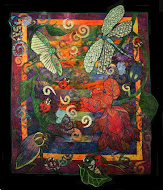
A Beauty Beheld
Guest Blog On Subversive Stitchers!
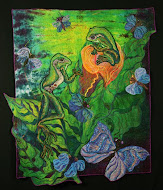
The Stories Tell Me
Networked Blogs


