
Tuesday, May 31, 2011
Designing Ways: East Meets West
 9:01 AM |
  Posted by
Ellen Anne Eddy |
Posted by
Ellen Anne Eddy |


It's almost impossible to talk about our art without talking about the art that comes before us. Before we talk about design, it's worth saying that there are many different design aesthetics. It's not that a design is good or bad necessarily. It's designed to be part of the statement. The notions that fuel our art choices are a statement loud and clear past subject matter and past our technical handling of fabric and thread.
As quilters, a lot of us have backed into art by accident. We started with squares and one day found ourselves with an odd quilt that somehow was an art quilt. Maybe it had too much orange in it or you found yourself like me, embroidering frogs and bugs into the borders.There's a tender soft spot in most quilter's artistic persona. The part that said that you should have gone to art school or studied water color. So our first designs spring out of a personal view. Later, as we become more facile, we realize that the choices in design are a huge statement all their own.

My first artistic love was the impressionists. I grew up near Chicago, and there was a pilgrimage every year to the Art Institute. I strolled through the halls looking for paintings like old friends. Since they were my first real introduction to art, they felt bland to me. Safe. Something soft and soothing out of my childhood.You know it's become mainstream when you see it on a birthday cake. This astonishing cake is by Megpi, a pastry chef in Silver Lake. California. You can see her work if you follow the link to Flickr.

impressionist cake, a photo by megpi on Flickr
Since you can buy Van Gogh's work on umbrellas and coffee cups, it's easy to miss the point that he was a raving revolutionary in his time. His work nauseated the current critics, got him hospitalized, was refused for all the important salon shows, and the subject of ridicule in the press. Time and familiarity have made him a lionized artist, but that was not who he was when he began.

I was immediately in love when I discovered Japanese prints. It was a while before I realized why. The Impressionists took much of their new artistic vision from the prints out of Japan. The first prints that came out of Japan hugely influenced them as beginning artists.

In contrast, this is a painting called Nocturne from around 1825 by Turner. Turner would have represented the design aesthetics from the early 19th century, that Van Gogh and the other impressionists and Post Expressionists blew out of the water.
Early 19th Century Western art was about permanence. It honored stability. It was a world of people in their proper places, forever and ever. It used Greek and Roman scenes and portraits of nobility as an way of saying we had an eternal understanding of a world that stayed the same.
Japanese art was about the moment. It moved. It created a path for the eye to follow. It went off the page. The impressionists saw it, fell in love with the concept and incorporated it into the designing of their art. And changed us all.
The decisions behind design are the most telling. Without a word they say so much about what we create, what we find important, and what we value. The way we structure our art is at least half the story we tell.
 Labels:

Monday, May 30, 2011
Designing Ways: An Exploration of Design in Fiber Art
http://youtu.be/eNAcJ9o4XP0

Just recently I've been looking at the Spoonflower website. At Spoonflower you can design your own fabric.
That sounded simple. You add cool elements from your quilts on a neat background. How hard can it be? How cool can it get?
Well I don't think it get's cooler, but it's not as easy as it looks. I'm not ready for prime time yet but it's reminded me how important design is, and how it changes when we have different things we want out of our designs. So I'm going to take some time to explore design myself and to talk about that in some posts.
So often when we create we get all caught up in what we're creating. A flower, a frog, a bug, a picture. But design is the hidden framework under all of that. There are different aesthetics to design, different theories, different approaches. So when we talk about good design, we need to ask the question, "For what purpose."Designs that repeat are a whole different set of considerations from designs that don't have to. I'd like to look at design over a series of posts, from the point of view of pathway, rhythm, framing, and balance. Next time, East Meets West.
Saturday, February 26, 2011
In Search of Peacock Colors: Anatomy of a Color Study


So I went in search of peacock colors. Dyeing fabric is one of the best ways to understand color. So I went out to dye some peacock colors.


No wonder it's so exciting.
So this is what i dyed!


Mystery solved! I used an analogous range of procian dyes including turquoise, teal, robins egg, chartreuse, jade, cayman island green, and sun yellow. The chartreuse is the olivey contrasting sun color. I stalked the wild peacock. Now those colors are mine!
Don't be afraid to hunt for the big game: the fabulous colors that rock your world and move your furniture. Use them, chart them, put them where they can excite you and illuminate your world.

If you want to explore more of the world of sponge dyeing and how the color wheel works, check out my book, Ellen Anne Eddy's Dye Day Workbook. Not just a dye book, it explains why the colors do what
they do together visually. It's available on my site at www.ellenanneeddy.com
Wednesday, February 23, 2011
Beadaliscious: Eye candy and puctuation
As addictions go, it started small. I worked in an antique mall for a while where there were several people working in old Czech glass beads. I can ignore most gem beads. I can ignore crystal. But Czech glass can empty my pockets so fast it's like there's a hole. I made my fair share of necklaces and earrings and found myself way too involved quilting to play endlessly with beads.
 But beads sneak in. They're so pretty. They're shiny. They're almost like candy without the calories. They also make fabulous details. When I did the embroidery for Tigrey Leads the Parade, almost all of the flowers in my gardens were great glass beads.
 Where do they come from? I never pass on a bead shop, no matter where I'm traveling, but the bulk of these beads came from an amazing store that's literally down the street from me.
Blue Stem Beads. They're in my little town of Porter, but their collection is mighty and for the size, it's one of the best bead stores I ever saw. Almost all the beads for this book came from there.
These were hand stitched onto tea towels I embroidered. They were fabulous flowers and too much fun. You can see and purchase Tigrey Leads the Parade at my web site www.ellenanneeddy.com
You'll find Blue Stem Beads in Porter,Indiana (just an hour out of Chicago. It's an astonishment.
For the next few posts I'm going to talk about other cool and wonderful ways I've used beads and seen beads used in quilting.
You'll find


 Where do they come from? I never pass on a bead shop, no matter where I'm traveling, but the bulk of these beads came from an amazing store that's literally down the street from me.
Blue Stem Beads. They're in my little town of Porter, but their collection is mighty and for the size, it's one of the best bead stores I ever saw. Almost all the beads for this book came from there.
These were hand stitched onto tea towels I embroidered. They were fabulous flowers and too much fun. You can see and purchase Tigrey Leads the Parade at my web site www.ellenanneeddy.com
You'll find Blue Stem Beads in Porter,Indiana (just an hour out of Chicago. It's an astonishment.
For the next few posts I'm going to talk about other cool and wonderful ways I've used beads and seen beads used in quilting.
You'll find
Blue Stem Beads at 300 Lincoln St # 1X |
Porter, IN 46304-1894
(219) 926-9004
Monday, January 10, 2011
In Praise of Pockets!
 |
| Ellen, Birdy and Ivy |
Golum's riddle to Bilbo the Hobbit
I'm from a story telling family. My mother was Irish. She had many shortfalls, but she could embroider a story until it glowed silver and gold. My father, being of English blood almost never spoke at all.But he read constantly. And when I was a child they both read constantly to me.
One of my mother's favorites was Katie No-Pocket.This child's delight is about a kangaroo who has no pockets and a very tired out baby who she can't always hold when she's traveling. She discovers aprons in her travels and has so many pockets she carries all the other neighbor animals as well.
I think the stories we tell are cement that could fix the world. The stories we tell ourselves can change our fears and our expectations of ourselves and of the world. The stories we tell our children meld theirs. We should always tell stories, but I think we need to understand that they are powerful and wildly unexpected forces. Certainly they teach us how to turn our daily woes into wows.
I know there are somewhere, neat little girls who grow up to be neat adults. I never was one. I made mud pies. I still kind of do. So aprons are a huge part of my life. I don't need an apron to cover my waist or my front. Preferably the 360 degree cover all is what's required. I love aprons for that reason.
But best of all, THEY HAVE POCKETS!
I can lose almost anything. I lose things in front of me as a specialty. So anything I need all day goes into my pocket. My phone, my daily do list, my pen, dog cookies, a rotary cutter, a snack, a book, a flash drive, my camera,the TV remote. But it's all there, somewhere. I have my scissors clipped on at my neck. If it's on my body, it's not lost.
Does that sound like a big pocket? Well, yes. And it does clank.

The only downside to this pattern is that it takes 6 yards of bias. I cut mine from a bias tube (in whatever yummy fabric I want) and put it on with a serger with fusible thread in the lower looper.

You'll find instructions for no-hand-stitch bias on a serger in my booklet, Machine Binding Techniques.
You'll find my favorite apron pattern here or at your local pattern store. My Favorite Apron Pattern
You'll find other apron patterns here.
Search Amazon.com for apron patterns for women

You'll also find Katy No-Pocket (Sandpiper)
 at Amazon.com. Read it for yourself or share it with your babes. It's a story that changes worlds.
Get ready to get messy and not lose anything. How good is that? The book should fit in your pocket.
Wednesday, September 22, 2010
Bobbin Work: On the Loose-Dealing with Distortion

As you've seen, the possibilities are endless entertainment. Bobbin work is easy, fast and fun.
I hope you got out your machine, played around, looked through your thread box and started to explore this great new world.
But there is a dark side. Any time you've put that much thread through a fabric surface you can be looking at some serious distortion. It depends largely on how much you fill in. If you're just outlining things or stippling, it's probably not a problem. If, like myself, you got a bit crazed and did a four foot cricket, it's probably ruffling up like a child's party dress.
I don't believe in giving recipes for cakes that don't rise. I might forget to tell someone an important ingredient but I'd never deliberately leave it out. I hate games where you can't win, and I won't ever do it to a student, a friend, a stranger or stone cold adversary.
So here's the extra ingredient. If we're working on a dense piece of embroidery, we can always cure it by cutting.
Any larger image (over 3 square inches) I'll do on a separate sandwich of felt, fabric, and stabilizer and treat it like an appliqué. When I'm done, I cut right on the edge ( don't cut through the stitching) and zigzag free motion around the edges with black thread to make it all pop. We cut of the distortion and life is so much better. What problem?
You'll find the information for preparing your felt and fabric sandwich on a previous blog Fabulous Felt: Unthinking Interfacing.

Your sandwich, top to bottom is
Surface fabric
Steam-A-Seam 2
Polyester felt
Totally Stable
Steam iron it well so that your Steam-A-Seam 2 is melted, sticking things in place and won't gum your needle.
My hoop is Sharon Shamber's Halo Hoop.You'll find more information on it in a previous post Hoop-Dee Do.
Wrapping it up:
Really dense bobbin work may ruffle and distort your surface. Do it on a separate stabilizer sandwich and cut the appliqué out. Use the free motion zigzag stitch to apply it to your quilt.
Thursday, August 12, 2010
The Trees Speak!

Are books dead?
My first impulse is to grab every child I see on the street, bake a big batch of cookies, sit them on my porch and read to them. Reading is the window to the world. Can you tell I came out to teach primary? Well, yes.
It's actually deeper than that. My mother taught school and was president of the library board. Both she and my father read to me nightly. Of course she read me The Little Gray Squirrel. My father read me whatever he was reading. It ranged from the Jungle Book, to Argosy Magazine to Gods Graves and Scholars. I was around three at the time. I can't say I understood it all, but it cemented my love for books. I can't imagine a world without them. I can't go to sleep without one either. The smell of ink, the touch of paper, glossy and full of color and impact, still is electric for me. The stories are often my only company for days.
Technology often scares me. I went through a phase where I refused to learn how to use my voice mail. It was childish, but I felt overwhelmed. My ten year old neighbor is teaching me how to text. I'm not a quick study.
So when you tell me books are dead, my panic starts to rise like sap up a tree. I have images of all of us rushing into book stores and saving the books!
But books are not just paper and binding. Really what a book consists of is a story told, an event explained, a technique discovered, a life explored. Books are information! Information is always holy and always needs to be preserved.
Having written several books, in the current age, I can tell you that they are completely set up digitally now. When I finish a book and it goes to the printer, it goes simply as a PDF file, electronically sent and received. The printed form is simply one of many ways it can be distributed.
Technology changes. As daunting as I find technology, I no longer rush to my herbal books when the dogs are hurt. I go on the internet. The search for information is eternal. The formats will change in time and space. I have an image of monks rushing a printing press saying that it couldn't possibly produce the kind of books they had over the years. They would have been right. The printing press a huge open door they could have never reached with a pen in their hands.
Lately I've discovered Audible.com. You can download books to an mp3 player and listen. I'm in love. It's as if my father is back reading to me. My player holds around 20 books at a time. And my mp3 player fits in my bra. How many books can you carry in yours?
Wrapping it up:
The technology changes, but the need for information is eternal. Books will go on and speak for ever.They may just not be made of paper any more. And since digital storage isn't anything like a library full of books, they may well be much more available for longer periods of time and in ways we can't imagine.
You'll find MP3 books at Audible.com
You'll find more of my books at Amazon or on my web page at
Subscribe to:
Posts (Atom)
Essential Embroidery Stitches

Get this free book from Quilting Arts. It has a series of articles I wrote called Defining the Line
My Blog List
-
Moving Day14 years ago
-
Getting Together14 years ago
-
Getting Together14 years ago


Facebook Badge

My Blog List
-
FOCUS5 days ago
-
Like a Rolling Stone3 weeks ago
-
Embroidered Felt Bowl #4.2 months ago
-
-
2021 Calendar5 years ago
-
A Change is Coming….6 years ago
-
GOrillas! on the Move!6 years ago
-
finish line in sight7 years ago
-
Easton Walled Garden7 years ago
-
-
Winsor Newton Pigment Marker Review9 years ago
-
gelliprint met gedicht9 years ago
-
Casey's T-shirt Quilt9 years ago
-
-
The San Salvador Sails By ...9 years ago
-
-
Construction Zone 10111 years ago
-
What a summer....so far11 years ago
-
Revealing BSBP 8....12 years ago
-
So this is Week 7?12 years ago
-
The last cloth doll making cruise13 years ago
-
-
Fall journey13 years ago
-
I've Moved...My blog That Is!13 years ago
-
This Blog has Moved....13 years ago
-
QUILTVERSE HAS BEEN REVIEWED!14 years ago
-
-
-


Guest Blog On Quilt Gallery
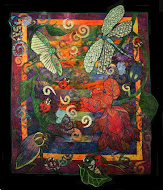
A Beauty Beheld
Guest Blog On Subversive Stitchers!
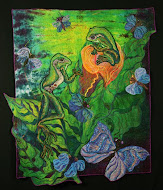
The Stories Tell Me
Networked Blogs


